Keep me updated!
Just when you thought election season was over, here’s one more thing to consider:
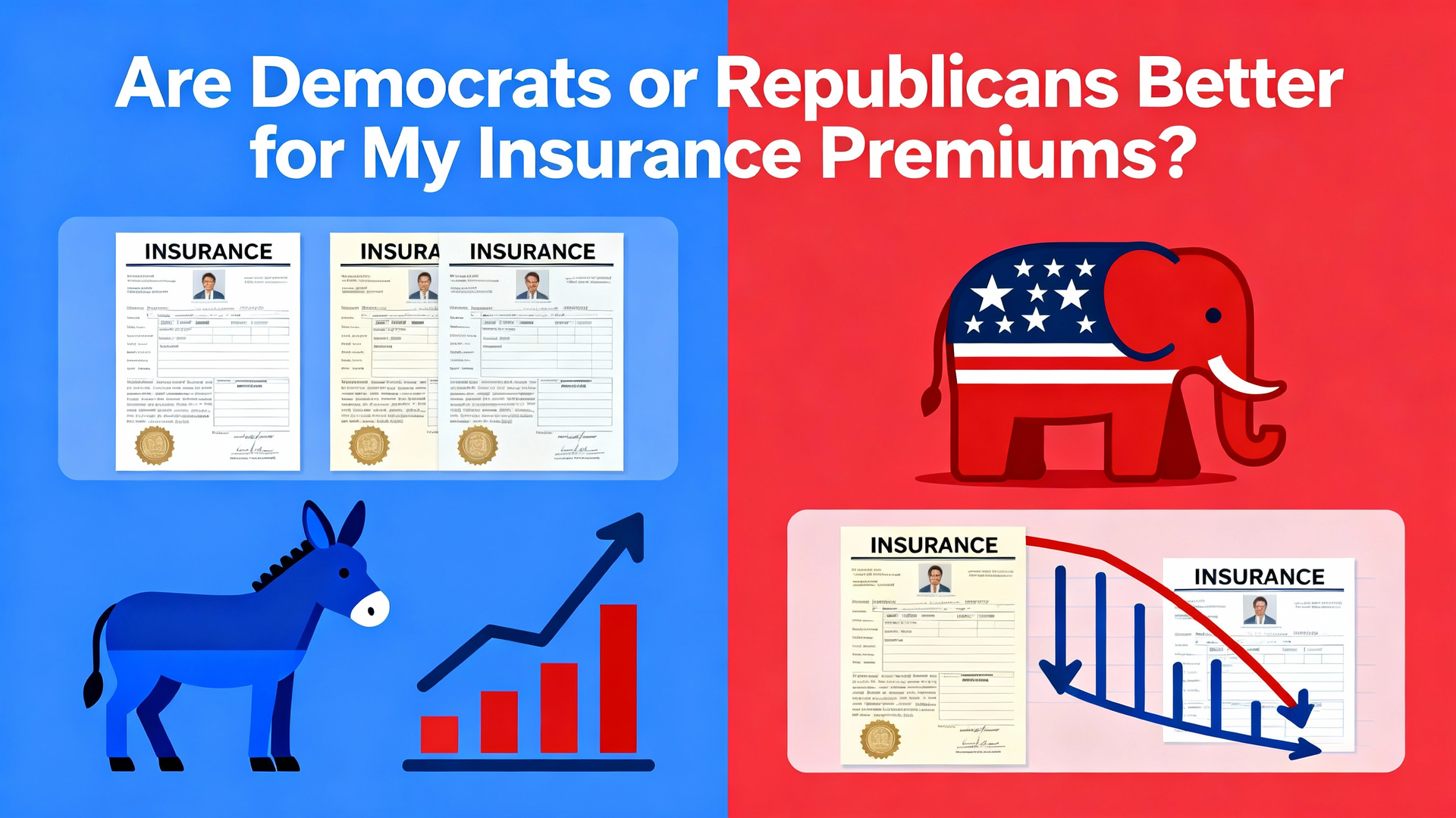
How do political outcomes affect your insurance premiums? More importantly, do Democrats or Republicans tend to create a better environment for your insurance costs, policy availability or claims experience?
Short answer:
Yes, elections matter — but not in the way most people assume. Your vote at the local, state and federal level can influence insurance pricing, availability, regulations and even the insurers willing to operate where you live. Let’s break down how each party typically approaches insurance, and why the results aren’t as predictable as you might think.
How Republicans Tend to Approach Insurance
Generally, Republican policymaking leans toward
deregulation, which often means:
- More flexibility for insurers in pricing and product offerings
- Tax reforms that benefit insurers (e.g., Tax Cuts and Jobs Act of 2017)
- Support for privatizing parts of Medicare
- Tort reform aimed at reducing insurer litigation costs
These policies can reduce operating burdens on insurance companies, potentially encouraging competition. But deregulation can also mean fewer consumer protections depending on the state.
How Democrats Tend to Approach Insurance
Democrats tend to support
regulatory stability and consumer protections, such as:
- The Affordable Care Act (Obamacare)
- Expanding Medicare access
- Enforcing anti-discrimination rules in insurance markets
- Creating the Consumer Financial Protection Bureau (CFPB)
- Increasing oversight of financial and insurance products
These policies can create more standardized coverage and consumer rights, but more regulation can also mean increased compliance costs for insurers.
Keep me updated!
The Role of Insurance Commissioners
Here’s where politics directly affects your insurance premium:
state insurance commissioners.
These are the individuals who control:
- What insurers can charge
- Which companies can operate in the state
- What products can or cannot be sold
- How claims disputes are handled
Eleven states elect their insurance commissioner:
California, Delaware, Georgia, Kansas, Louisiana, Mississippi, Montana, North Carolina, North Dakota, Oklahoma, and Washington.
Of those, only
California, Delaware and Washington currently have Democratic commissioners. All others lean Republican through elections or governor appointments.
What the Data Shows (and Why It’s Not What You Expect)
Let’s look at three key metrics that should theoretically show differences between the parties.
1. Auto Insurance Premiums
- Most expensive:
Louisiana (Republican-led)
- Least expensive:
North Dakota (Republican-led)
So does Republican leadership always mean lower premiums?
Nope — not consistently.
2. Insurance Availability
Measured by number of active insurers in a state:
- Fewest:
California (115 companies) – Democrat
- Most:
Washington (125 companies) – Democrat
Once again, same party… opposite results.
3. Claims Satisfaction
Based on customer satisfaction with claims handling:
- Highest:
California (876/1000) – Democrat
- Next highest:
Washington (874/1000) – Democrat
Democratic leadership here correlates with strong claims satisfaction — but that doesn’t tell the whole national story.
4. Best Overall States for Insurance Experience
According to
U.S. News & World Report (2024):
- Best: Utah – Republican
- Worst: Louisiana – Republican
Same party. Best and worst. No pattern.
So Which Political Party Is Better for Your Insurance Premium?
After reviewing premiums, claims, availability and state rankings, here’s the only honest answer:
There is no clear winner.
Insurance outcomes vary dramatically within each political party’s leadership. Both parties produce states with the highest rankings, and both produce states with the lowest.
The real takeaway:
Insurance regulation is less about party affiliation and more about:
- State-specific laws
- Local market conditions
- Catastrophic losses
- Insurer participation
- Regional risks (wildfires, hurricanes, storms, etc.)
- Economic and demographic trends
No political party has a perfect formula — and neither has a monopoly on good (or bad) results.
The Bottom Line
Before blaming rising premiums on Democrats or Republicans, keep this truth in mind:
Insurance outcomes are complex, and politics alone cannot predict what you’ll pay.
Both parties have strengths. Both have weaknesses.
Neither consistently delivers cheaper premiums, better coverage or more insurers.
Maybe the real answer — politically and insurance-wise — is that
no single ideology holds all the solutions.
Want to learn more about insurance? Visit KarlSusman.com.
Keep me updated!